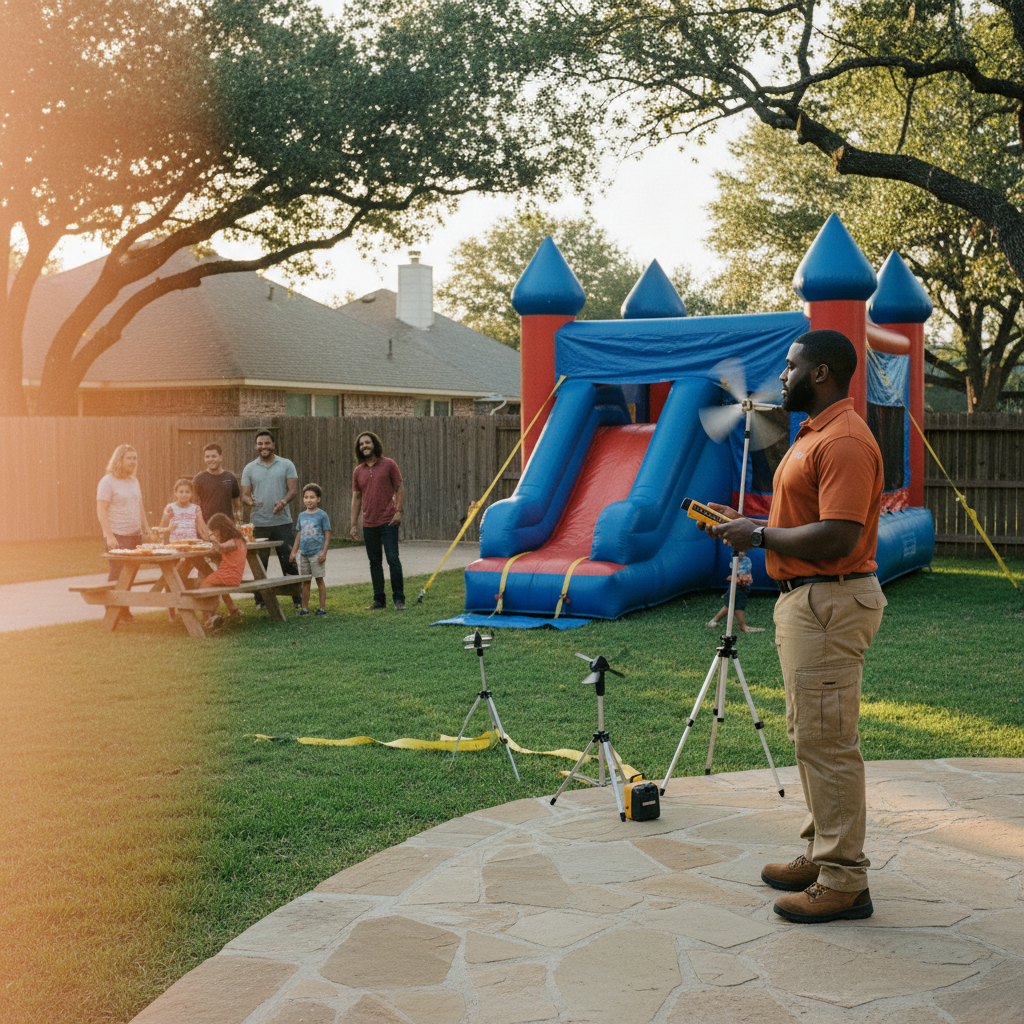
Wind Load & Weather Safety for Inflatable Rentals: What Every Operator Needs to Know
Jump Around Party Rentals - 512-294-2221 Jump Around Party Rentals is your go-to source for bounce houses and more in Austin! We've been a leading party rental
How Jump Around Party Rentals Handles Wind Load & Weather Safety for Inflatable Setups
One missed calculation can turn a birthday party into an emergency. When wind speeds cross safe thresholds for inflatables, even a well-planned Austin celebration can go sideways in minutes. At Jump Around Party Rentals, we've watched solid wind load analysis turn event safety from guesswork into something you can actually depend on - because we've also seen what happens when operators skip that step.
Safe inflatable operation depends on precise wind load calculations that account for structure dimensions, wind speed, anchoring systems, and real-time weather monitoring to prevent accidents and stay compliant with safety regulations.
Professional inflatable structure wind resistance analysis goes well beyond a quick glance at your weather app before setup. Every bounce house, slide, and obstacle course has its own aerodynamic profile that demands careful review. Whether you're running a small backyard party in Zilker or a corporate event on Sixth Street, understanding these forces protects guests and keeps operators out of legal trouble.
Solid weather planning for inflatable installations means tracking several meteorological factors at once. Wind direction shifts, gust patterns, and incoming storm cells all change how air moves around and through inflatable structures. Our safety-inspected approach pairs real-time monitoring with proven engineering principles to build protocols you can actually count on.
This guide walks you through the essential calculations, industry standards, and practical steps that separate professional installations from risky ones. You'll learn how to set safe wind speed limits for bounce houses, anchor equipment properly, and build emergency procedures that protect guests while keeping your reputation intact. These methods will change how you approach every single setup.
Why Does Wind Resistance Analysis Matter for Event Rental Companies?

Wind resistance analysis matters because it stops equipment failures before they happen. It protects guests, preserves your gear investment, and keeps your operation in line with industry rules by measuring the actual forces wind puts on temporary structures.
Planning outdoor events across Austin - from Zilker Park to South Congress - means wind load calculations can be the difference between a great party and a genuine disaster. Even moderate wind speeds put enormous pressure on large inflatable surfaces, and that pressure can flip, collapse, or launch equipment if the numbers aren't right. We've seen this fail when operators skip the pre-event site assessment entirely.
Industry safety standards call for securing or shutting down inflatables when sustained winds exceed 25 mph, but a thorough analysis looks at gust patterns, equipment size, and anchoring capacity well before you approach that number.
Stopping inflatable accidents before they start means checking several things systematically:
Surface area calculations that establish total wind exposure
Ground condition checks that confirm anchoring will actually hold
Live weather monitoring during the event itself
Clear shutdown steps for when conditions drop below safe levels
Here's the thing: wind force doesn't scale evenly. Double the wind speed and you quadruple the force hitting the inflatable. Our wind load and weather safety strategies include pre-event site surveys, matched anchor selection, and ongoing monitoring that have kept Austin families safe since our first season in 2008.
Good weather planning for inflatable installations also protects your equipment budget. One wind incident can wipe out thousands of dollars in rental inventory while opening you up to liability claims that can threaten the whole business. Safety-inspected gear combined with proper wind stability analysis keeps your service reliable no matter what Texas weather throws at you.
Current safety guidelines for inflatable outdoor events pull from meteorological forecasting, structural engineering, and real operational experience to build protection strategies that keep Austin events running safely regardless of what's coming off the Gulf.
How Do You Actually Calculate Wind Load for Outdoor Inflatables?

Wind load calculation for outdoor inflatables combines wind speed, the inflatable's exposed surface area, a shape coefficient, and air density - though in practice, most operators rely on industry guidelines and manufacturer specs to apply these numbers reliably.
Getting a handle on wind forces on temporary inflatable structures means working through several variables that directly affect safety at your next event. The core equation uses wind speed in mph, the surface area of the inflatable facing the wind, and a shape coefficient that reflects how air behaves around each specific design.
The variables that drive wind load calculations:
Wind speed squared - Force grows exponentially, not in a straight line
Inflatable surface area - Bigger bounce houses catch proportionally more force
Shape coefficient - Rounded units shed wind better than flat-sided designs
Air density - Altitude and temperature both shift the pressure numbers
Gust factors - Sustained winds and sudden gusts load the structure differently
The standard formula used across the industry: Wind Load = 0.00256 x V2 x Cd x A, where V is wind velocity, Cd is the drag coefficient, and A is surface area in square feet. That said, weather planning for inflatable installations goes further than the math alone.
Professional rental companies pair manufacturer specs with actual local weather data. Our wind load and weather safety strategies combine both to keep guest safety grounded in real Austin conditions, not just textbook numbers.
Wind forces become dangerous when sustained speeds hit 20 to 25 mph or gusts reach 30-plus mph. At those levels, even well-anchored units can lose stability. Safety guidelines for inflatable outdoor events generally require immediate deflation when conditions approach those limits. No exceptions.
Good anchoring techniques for strong winds use sandbags, stakes, and tie-downs rated for the calculated load plus a safety buffer. That buffer is what lets you focus on running a great party while the engineering handles the risk.
Inflatable Anchoring: Best Practices for Strong Wind Conditions

Solid anchoring in strong winds means combining heavy-duty stakes, water or sand bags, and concrete blocks, with each point secured independently to meet or exceed manufacturer specs and local rules. Out in the field around Austin, good anchoring technique for strong winds can be the only thing standing between a successful party and a dangerous situation.
Proper wind resistance analysis requires knowing which anchor types fit which conditions. No single method covers every scenario. The right call depends on surface type, expected wind conditions, and the size of the unit you're putting up.
Essential Anchoring Equipment Types
Stakes and Ground Anchors:
Heavy-duty spiral stakes - at least 18 inches for small units, 24 inches or longer for large inflatables
Auger-style anchors that thread into soil for maximum grip
Rebar stakes as secondary anchor points in firm ground
Weight-Based Anchoring Systems:
Water barrels (minimum 250 pounds per anchor point)
Sandbags, properly sealed and spread evenly across attachment points
Concrete blocks fitted with secure attachment hardware
Specialized Tie-Down Equipment:
Commercial-grade ratchet straps rated for outdoor conditions
Marine-quality rope tied with load-appropriate knots
Carabiners and D-rings at each connection point
Look, experienced operators all say the same thing: don't rely on a single anchor type. Redundancy is what prevents the kind of incident that shuts down your Zilker Park family reunion faster than ACL Festival traffic.
The bounce house wind speed safety process starts with current readings and forecasts, but your anchoring setup has to be ready for gusts that arrive without warning. Weather planning for inflatable installations calls for each anchor point to handle 150 percent of the calculated wind load independently, so you're exceeding the standard rather than just scraping by.
Proper anchoring isn't a checkbox. It's the foundation of reliable service that Austin families can trust, especially when a Texas afternoon decides to throw a wind shift nobody predicted.
Weather Planning for Inflatable Installations: Wind Is Only Part of the Picture

Weather planning for inflatable installations covers lightning, heavy rain, temperature extremes, and saturated ground - all of which can undermine safety and structural performance. While calculating safe wind speeds for bounce houses stays the primary focus, rental operators also track multiple weather factors to protect guests during Austin's notoriously unpredictable conditions.
Lightning is the most immediate threat. Industry standards require full evacuation when lightning strikes within 6 miles of the event site, which typically shows up as less than a 30-second gap between flash and thunder. Our team tracks live weather radar to make proactive shutdown calls before conditions get critical, covering events from Zilker Park to South Congress.
Heavy rainfall can cut anchor stability by up to 60 percent. An installation that was perfectly secure in dry soil can become dangerous in moderate winds after an hour of steady rain.
Temperature extremes add another layer to inflatable wind resistance analysis. Vinyl gets brittle below 40 degrees Fahrenheit and can degrade above 95 degrees, both of which affect how the structure holds up under load. Heat indexes over 100 degrees require stepped-up supervision and easy access to water and shade.
Weather monitoring checklist for every event:
Wind speeds - both sustained readings and gust peaks at 10-foot height intervals
Lightning detection within a 10-mile radius
Precipitation forecast for duration and intensity
Ground moisture and drainage capacity at the setup site
Temperature and heat index ranges across the event window
Barometric pressure trends that signal incoming storm development
Heavy rain affects more than guest comfort. Standing water adds real stress weight to inflatable structures and kills traction on entry and exit surfaces. Weather planning for inflatable installations always includes drainage review and weatherproofing of electrical connections to keep everything operational and safe.
Professional operators run full site assessments that look at drainage flow, tree canopy proximity, and wind corridor effects created by surrounding buildings. If you're hosting an event during Austin's spring storm season, expect any reputable rental company to apply stricter weather protocols. That's not excessive caution. That's the job.
Safety Rules and Regulations for Inflatable Wind Conditions

Following safety rules for inflatable wind conditions means stacking manufacturer specs, local ordinances, and industry standards like ASTM on top of each other so every deployment clears every bar that applies to it.
Planning outdoor events anywhere in Austin means inflatable wind resistance analysis is a participant safety requirement, not a suggestion. Professional rental operators have to work through several regulatory layers while completing thorough weather reviews for inflatable installations ahead of every deployment.
ASTM International Standards set the baseline for inflatable safety. The ASTM F24 Committee specifically covers amusement rides and devices, laying out detailed requirements for:
Wind speed monitoring and documentation procedures
Structural anchoring specs tied to inflatable size and design
Emergency shutdown steps when weather turns
Inspection schedules and safety equipment upkeep
Our team runs these ASTM standards alongside manufacturer guidelines so every installation clears a genuinely rigorous safety bar.
Local permitting and inspection rules vary across Texas. Austin's Development Services Department requires specific documentation for commercial inflatable operations, including:
Pre-event safety inspections done by certified technicians
Wind monitoring equipment calibrated to manufacturer spec
Emergency response plans built around the specific venue and attendance size
Operators must monitor weather continuously during events and follow preset shutdown steps when sustained winds cross manufacturer limits - usually between 15 and 25 mph for residential inflatables, though that window shifts by unit.
Calculating safe wind speeds for bounce houses requires reading both sustained speeds and gust spikes together. Digital anemometers give real-time data that lets operators decide whether to keep securing the unit in rising winds or begin shutdown before conditions force the issue.
Frequently Asked Questions About Inflatable Wind Safety
What wind speed is dangerous for inflatables? Most safety professionals say stop operations when sustained winds hit 15 to 20 mph, though the exact cutoff depends on equipment size and how the unit is anchored. Our weather safety protocols follow manufacturer guidelines strictly and pair them with live local monitoring to protect guests.
How do you calculate wind load on bounce houses? Calculating safe wind speeds for bounce houses means measuring the wind-facing surface area, applying the right pressure coefficient, and building in a safety margin. The working formula is: Wind Load = 0.00256 x V2 x Cd x A, where V is wind velocity in mph, Cd is the drag coefficient, and A is surface area in square feet.
What anchoring methods hold best in windy conditions? Reliable anchoring techniques for strong winds include:
Heavy sandbags at a minimum of 40 pounds per anchor point
Ground stakes driven 24 inches or deeper into soil
Water barrels for setups on hard surfaces
Guy lines and tensioning systems on large units
"We calculate for worst-case scenarios because Austin weather can change faster than you can say 'Keep Austin Weird.' Meeting the minimum doesn't cut it - you have to build past it."
When should events be postponed because of weather? Weather planning for inflatable installations goes past wind speed alone. Postpone when:
Sustained winds cross manufacturer limits
Gusts hit 25 mph or higher consistently
Severe weather warnings are in effect
Lightning is within 10 miles of the site
How often should you check wind conditions during an event? Professional operators check continuously, with formal readings every 15 to 30 minutes. Whether you're in Zilker Park or at a downtown corporate venue, safety guidelines for inflatable outdoor events require constant attention and fast response to anything that changes.
Quality rental companies keep safety-inspected equipment under reliable service protocols that put guest protection ahead of revenue. Simple as that.
Our Safety Commitment: What You Can Expect from Every Rental
Getting wind load and weather safety calculations right is the foundation of every inflatable rental we do. Inflatable setup safety is paramount at Jump Around Party Rentals; we hold to a consistent safety standard so every event is remembered for the fun, not the close calls.
This guide covered the core safety practices that separate professional inflatable operations from risky ones. From solid weather planning for inflatable installations to choosing the right anchoring setup, every piece connects to protect children and the adults organizing the event.
"Safety means creating conditions where families can focus on having a good time while we handle the technical details that make that possible."
The practices we covered:
Continuous wind speed tracking throughout every event
Site assessment and matched anchor selection before setup begins
Live weather review with defined response steps
Direct communication with event organizers about what conditions require action
Regular equipment inspection on a fixed maintenance schedule
Our team treats safety training as ongoing work. We track industry updates, weather forecasting tools, and safety standards for inflatable outdoor events so Austin families get reliable service backed by current knowledge - not years-old checklists.
Whether you're running a backyard celebration in Zilker or a larger community event in Round Rock, our quality rentals include these safety calculations on every install. We handle the wind resistance math, the anchoring decisions, and the supervision protocols. You focus on the party.
Ready to book with a team that takes this seriously? Contact our wind load and weather safety team today. Our safety-inspected equipment and customer-focused approach make sure your Austin event stays both fun and safe from start to finish.
Frequently Asked Questions
Q: How much wind can inflatables handle?
Most inflatables are built for sustained winds up to 20 mph, though that number shifts depending on the unit. Always check the manufacturer's specific limits and any local rules that apply. Strong gusts can require immediate deflation even when sustained speeds are within range. For guidance on inflatable wind resistance analysis, the team at Jump Around Party Rentals can walk you through what applies to your specific setup.
Q: What is the safety factor for wind load?
The standard safety factor for wind load on inflatables runs between 1.5 and 2.0. That means the anchoring system is built to hold 1.5 to 2 times the maximum expected wind force. That buffer accounts for conditions you can't fully predict. For more on how we apply these margins, see our approach to weather planning for inflatable installations.
Q: How do you calculate wind load from wind speed?
The calculation pulls in wind speed, surface area, drag coefficient, and air density. Honestly, most operators work from manufacturer charts rather than running the full equation themselves. For detailed wind load analysis on large inflatable rides, a qualified engineer is worth consulting to confirm you're hitting safety standards for inflatable outdoor events. Our wind load and weather safety resources are a good starting point.
Q: How much wind is unsafe for a bounce house?
Sustained winds or gusts above 20 mph are generally unsafe for bounce houses. Some manufacturers set the limit lower. Any sudden, unpredictable gust - regardless of what the sustained reading shows - should trigger immediate deflation and evacuation. We track wind speed thresholds for bounce house safety closely and shut down operations whenever conditions cross the line, full stop.